Rust solo god rock base survival shows how one player holds a fortified rock on a 1000-player server
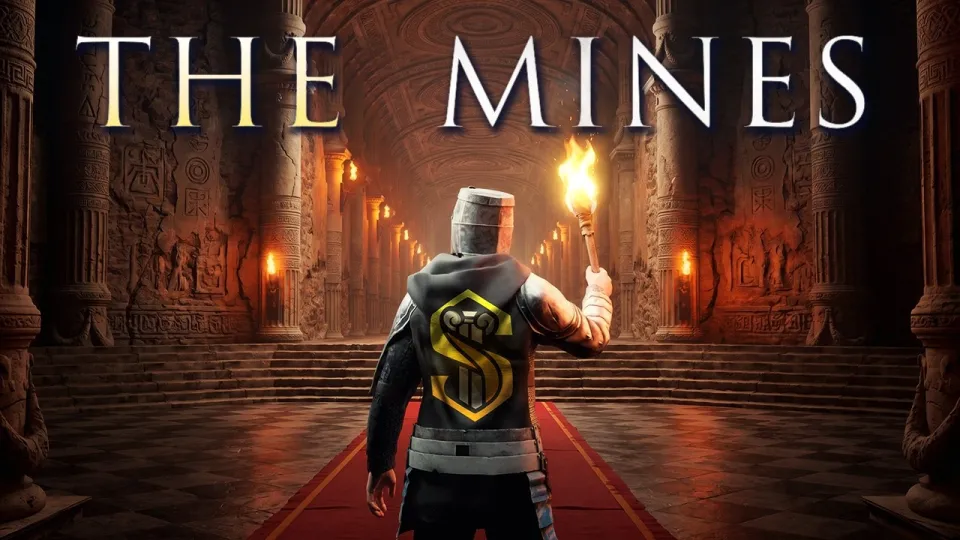
Video: I Survived in an ANCIENT FORTIFIED god rock base in Rust..
You can order the same kind of articles for your own video to boost it on YouTube and Google. Just message the Telegram bot @sat_sit_bot. The bot writes and publishes the articles itself (with your YouTube video embedded) on popular topical websites (no ads). Try it free: 50 articles on us.
· based on the channel Solutize
Key takeaways
- Solutize played a solo Rust wipe on a server with 1000 players.
- The base was an ambitious god rock build, a rock formation fortified with honeycomb and turrets.
- The run is documented in the video 'I Survived in an ANCIENT FORTIFIED god rock base in Rust..' published on 2026-10-01.
- Solutize streams the recordings live on Twitch and runs a Discord community for viewers.
- The channel's audience repeatedly asks for more solo wipes and duo crossovers with creators like Gorliac and Willjum.
A solo god rock base in Rust is a rock formation turned into a fortress: the player walls off the natural stone, honeycombs the gaps and stacks turrets so that raiders have to break through layer after layer. Solutize did exactly that on a server with 1000 players, and the run is documented in the video "I Survived in an ANCIENT FORTIFIED god rock base in Rust.." — you can watch the sessions being recorded live on Solutize's Twitch channel.
What a god rock base actually is in Rust
A god rock base uses the map's own terrain as free, indestructible walls. The player finds a rock cluster with a narrow entrance or a cave-like overhang, seals the openings with stone or sheet-metal walls, and builds the real loot rooms inside the protected pocket. Because the rock cannot be blown up, raiders are forced through the player-built sections, which is where all the honeycomb, doors and turrets go. The result costs far less than a free-standing compound of the same strength, and it is much harder to scout from the outside. The trade-off is location: god rocks sit where the map puts them, often away from monuments, so a solo player has to plan farming routes and supply runs around a fixed spot.
On a 1000-player server the value of that spot multiplies. Competition for every rock formation is high, neighbors are close, and a base that looks empty from outside is a much better survival tool than a big obvious compound.
The solo build order that makes a fortified rock work
A solo player cannot afford to build the whole fortress at once, so the sequence matters more than the final design. A practical order looks like this:
- Secure the shell first. Put a cheap foundation, a tool cupboard and a single door on the rock entrance before anything else, so the spot is claimed even if the full build takes days.
- Layer the honeycomb before adding comfort. Extra stone or metal walls between the entrance and the loot room buy the time a solo defender needs to react.
- Add turrets at the choke points. A turret covering the only doorway turns a raid into a timed problem and often discourages small groups entirely.
- Split the loot. A small secondary stash or a hidden box outside the main core means one successful breach does not end the wipe.
- Upgrade from the inside out. The core and the loot rooms get metal or armored first; outer layers stay stone until the wipe economy allows more.
This is slow, unglamorous work, and it is exactly what separates a surviving solo wipe from a two-hour restart.
Surviving on a 1000-player server as a solo
Population is the real difficulty setting in Rust. With 1000 players online, every monument is contested, roads are watched, and a solo farmer is the easiest target on the map. The god rock approach counters this by reducing exposure: short trips, a base close to the farming area, and no reason to build a visible landmark. Playing at off-peak hours, using secondary paths instead of main roads, and keeping the tool cupboard stocked are the boring habits that keep a solo alive. Solutize's run is built on the same logic — the base is the strategy, not just the backdrop.
Raid defense lessons from a rock fortress
Defending a god rock base is mostly about controlling the entrance. Attackers who reach the door are already committed, so the defender's job is to make that doorway lethal: a turret behind a peek, a shotgun trap on the inner frame, and a second door that forces a second breach. Sound matters too — a solo defender who hears the first explosive and immediately rotates to an interior angle usually wins the exchange against a larger group. The rock itself does the rest, since raiders cannot choose their own entry point. The lesson transfers to any base: the strongest defense is a predictable path for the attacker and an unpredictable one for the defender.
Questions viewers keep asking about solo Rust wipes
The channel's audience is consistent about what it wants next: more solo wipes, and crossovers with other creators such as Gorliac and Willjum. That is a useful signal about how solo content is received — viewers treat a single-player run as the harder, more instructive format, because every mistake is visible and every recovery is earned. Newer players also ask how someone keeps a channel this size going weekly while playing at a high level; the answer visible in the videos is routine: record, edit, publish on a schedule, and stream the raw sessions separately. If you want to see the unedited version of that process, the live streams are where the wipes actually happen.
Where to find Solutize's channels and community
All official links from the video, copied exactly:
- Twitch live streams: https://www.twitch.tv/solutized
- Discord community: https://discord.gg/57vX6Yvga6
- Second Discord invite: https://discord.gg/F9kEQWZjnd
Final thoughts on the ancient fortified rock experiment
A god rock base is not a shortcut to safety; it is a commitment to a fixed, defensible position and to the discipline of building it in the right order. Solutize's solo wipe on a 1000-player server shows the format at its most demanding, where the base design, the farming routine and the defense plan all have to work without a teammate to cover mistakes. If you want more of that, follow the channel and join the Twitch stream to watch the next wipe being recorded live. This breakdown was written around the video by Solutize, whose solo runs remain the clearest illustration of how far one player can push a rock and a plan.
Source: I Survived in an ANCIENT FORTIFIED god rock base in Rust.. · Markdown version
Questions & answers
Is a god rock base actually safe in Rust?
It is safer per resource spent than a free-standing base of similar size, because the rock cannot be destroyed and raiders must come through the player-built entrance. It is not invulnerable: a determined group with enough explosives can still break the honeycomb, so splitting loot and keeping turrets on the choke points remains essential.
How long does it take to build a fortified rock base solo?
Expect the shell, tool cupboard and first door to go up in the first session, with honeycomb and turrets added over the following days as materials come in. Upgrading the core to metal or armored is usually the last step, done once the wipe economy stabilizes.
Why do creators play solo on high-population servers instead of low-pop ones?
High population creates constant risk, which makes every decision visible and every survival meaningful to watch. It also mirrors what most players face on official servers, so the tactics shown transfer directly to their own wipes.
Where can I watch the full sessions behind these Rust videos?
The recordings happen live on Twitch at https://www.twitch.tv/solutized, and the community gathers on Discord via https://discord.gg/57X6Yvga6 or https://discord.gg/F9kEQWZjnd.